
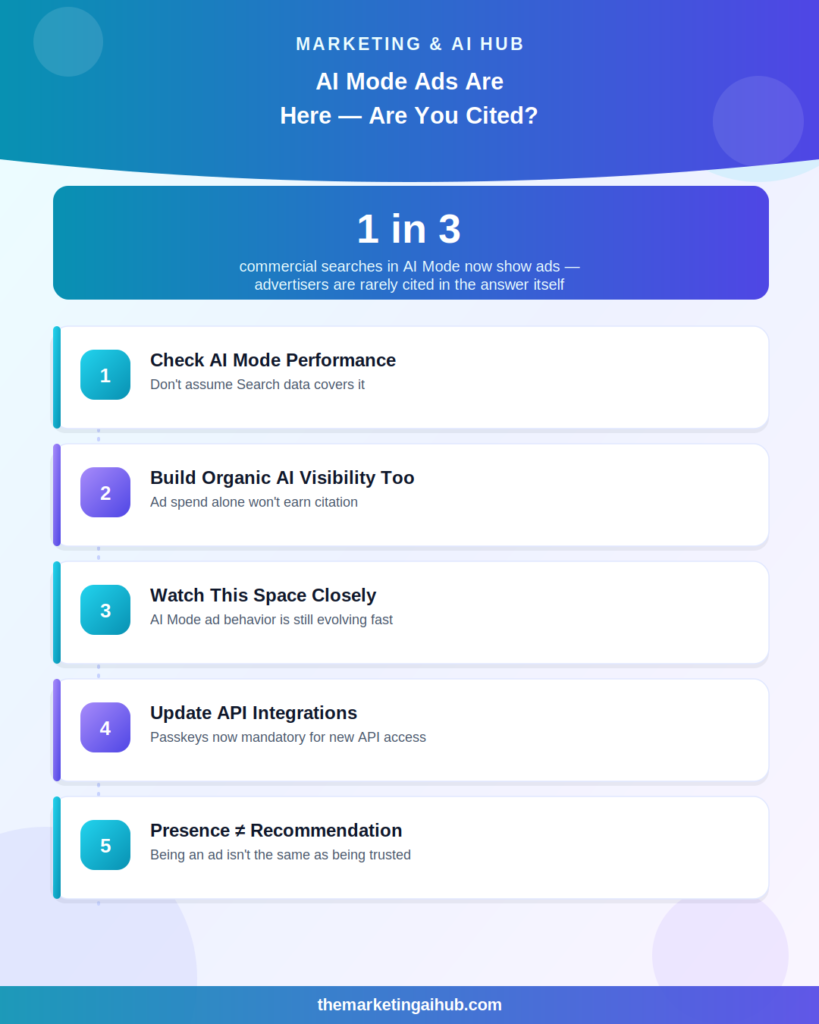
A new analysis of Google’s AI Mode just found something worth paying attention to if you run Google Ads: ads are now appearing on nearly a third of commercial-intent keyword searches inside AI Mode — but advertisers themselves are rarely among the sources AI Mode actually cites when generating its answer. That gap between “ads are showing” and “brands are being cited” is the real story here, and it points to a shift advertisers need to start preparing for now, not later.
What’s Actually Happening
AI Mode is Google’s conversational search experience, which blends an AI-generated answer with ads and citations pulled from across the web. The new data shows ad presence inside AI Mode has grown significantly for commercial searches — the kind of high-intent, “ready to buy” queries advertisers spend the most money targeting in traditional search. That’s a meaningful signal: Google is actively building out monetization inside AI Mode, not just experimenting with it on the side.
But the second part of the finding is the one that matters more strategically: even when a query is clearly commercial, the businesses being cited or referenced inside the AI-generated answer are often not the advertisers actively bidding on those terms. Ads and organic AI citations are behaving as two separate, only loosely connected systems — appearing in the same experience, but not necessarily reinforcing each other.
Why This Matters for How You Run Campaigns
For years, the assumption in search advertising has been straightforward: rank or bid well, show up, get clicked. AI Mode breaks that clean relationship apart. You can be paying to appear as an ad in AI Mode and still be functionally invisible in the actual AI-generated answer that shapes what the searcher trusts and reads first. That’s a genuinely new dynamic — being present isn’t the same as being recommended.
This connects directly to something we’ve covered before: only a small fraction of what AI models cite comes from traditional top-ranking pages. AI Mode’s ad behavior suggests the same disconnect exists on the paid side too. Winning a bid doesn’t guarantee you’re part of the trusted answer.
A Related Change Worth Knowing About: Mandatory Passkeys for New API Access
Separately, Google has made passkeys mandatory for new Google Ads API authentication. If you or anyone managing your account is setting up new API access — for automation tools, reporting dashboards, or agency management platforms — this now requires passkey authentication instead of the older methods. Existing refresh tokens already in use aren’t affected, so current integrations should keep working, but any new setup needs to account for this. If you use or plan to use any third-party Google Ads management or reporting tool, check whether it already supports passkey authentication before your next integration.
What to Actually Do About the AI Mode Gap
1. Don’t assume your Search campaigns are automatically covering AI Mode well. Ad presence and AI citation are behaving as separate systems — check your account’s AI Mode-specific performance data if it’s available, rather than assuming your existing Search performance tells the full story.
2. Strengthen your organic AI visibility separately from your ad strategy. Since paid presence doesn’t guarantee AI citation, the content and site-authority work — structured, specific, citable content — matters as its own workstream, not something your ad budget can substitute for.
3. Watch this space closely over the next few months. AI Mode’s ad and citation behavior is still evolving quickly. What’s true about the gap between paid presence and AI citation today may shift as Google continues developing this experience — this isn’t a “set a strategy once and forget it” situation yet.
4. Keep API integrations current. If you manage multiple client accounts through third-party tools, confirm passkey support proactively rather than discovering a broken integration when you try to set up a new connection.
The Bigger Picture
AI Mode is quietly becoming a real advertising surface, not just a search experiment — a third of commercial searches now showing ads confirms that. But the fact that paying for placement doesn’t guarantee being part of the trusted, cited answer is the detail advertisers need to internalize early. The businesses that treat AI visibility and paid visibility as two separate things to actively manage will be ahead of the ones still assuming a good ad account automatically covers both.
Want help auditing how your Google Ads account is actually performing inside AI Mode specifically? Visit
themarketingaihub.com/contact